
To market a boring product, you sell the problem it solves to the one person who cares about that problem, and you make sure your website converts that person before you pay for a single click. Matt Slaymaker of Slaymaker Marketing runs ads for brands spending around $100 a day and brands spending more than $30,000 a day. When I asked him about boring products on The Unscripted SEO Interview Podcast, that’s where he started.
Every boring product solves a problem somebody cares about
I gave Matt my list of hard sells: agricultural equipment, concrete walls, behind-the-meter power for AI companies, a shop that burns waste motor oil. His answer was that boring is a surface problem. “Pretty much every business out there, at least every business that deserves to be in business and is successfully getting new customers, they’re solving an actual problem in the world.”
He used a car sensor he used to advertise as the example. It plugs into your car and tells you what the check engine light means. Nobody who isn’t a mechanic cares about that. So the ad didn’t sell a sensor. It said, “find out if your mechanic is ripping you off or not.” Same product, and now it’s about money you might be losing.
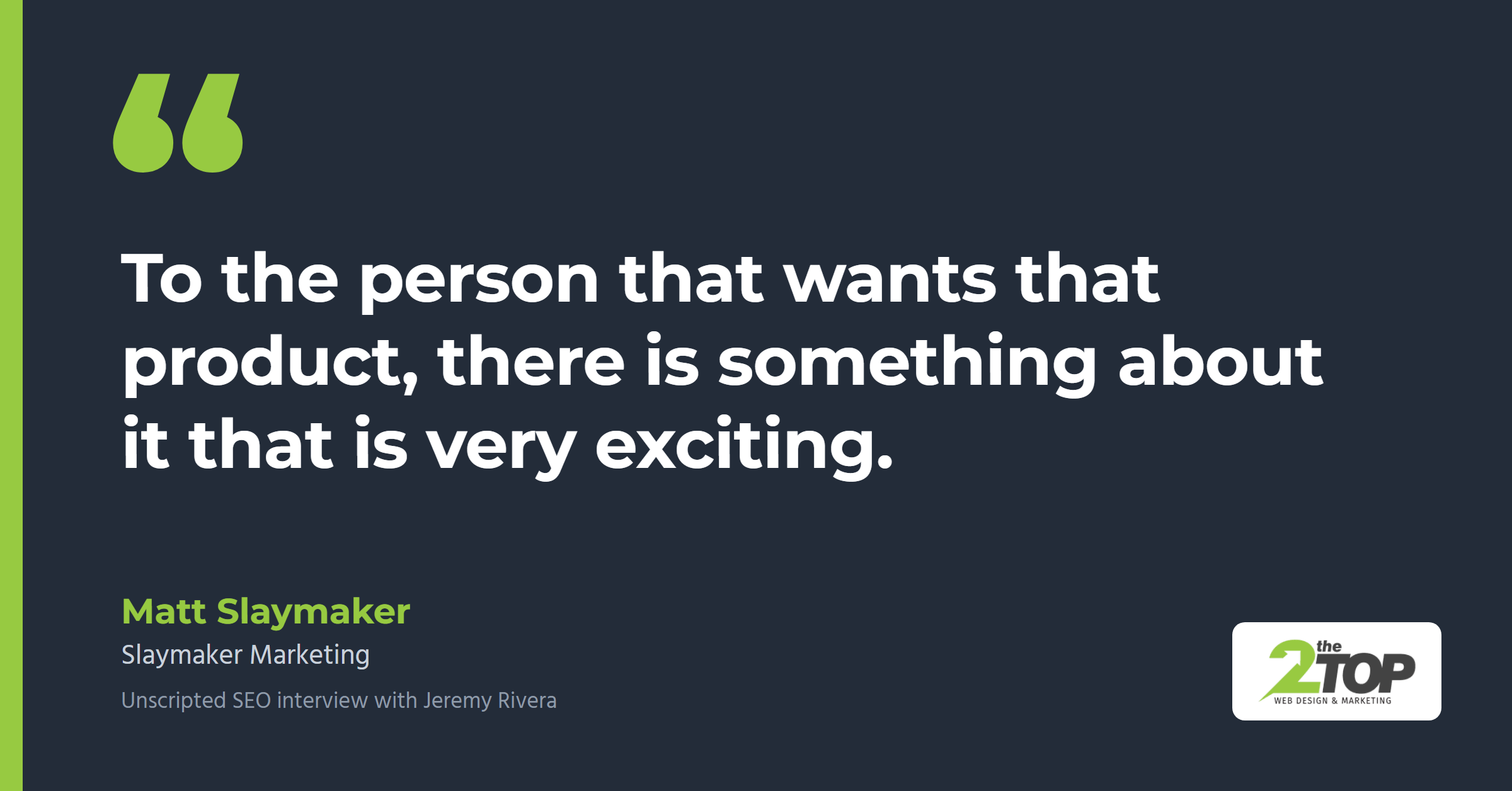
Take farm equipment. A company like Newton Crouch builds fertilizer spreaders and liquid sprayers. Nobody scrolls Facebook hoping to see a spreader. But the person paying for fertilizer cares a lot about where it lands, and Newton Crouch’s own site describes its equipment as “built for durability and accurate application.” That’s the angle I’d test first: product you paid for going where you meant it to go, season after season.
You can run the same exercise on your own product:
- Name the pain. What goes wrong, or costs money, for the buyer before they own your product?
- Name the person. Who feels that pain? The owner, the installer, the person signing the check?
- Show the value. Matt on brand values: “You can, absolutely, but you have to show it. You can’t just say it.” His example was Yellow Leaf Hammocks, where each hammock carries the name of the person who wove it.
Brandon Moon makes the same point about growth on the other side of our interview library: find the pain point first. He applies it to opening a second location in how to expand your business into a new market.
Let the comments write your next ad
Once an ad is running, Matt reads the comments. Some people say it’s overpriced. Some people say they love it, and tell you why. Both are free research. His team takes the complaints and builds ads to “objection bust as we call it,” and they take the praise and turn it into new angles they hadn’t thought of.
For a boring product this matters more, because you won’t guess the exciting angle from a conference room. The buyer will tell you, usually in the comments under an ad you thought was fine.
On Meta the creative does most of the work, on Google the targeting still does
Matt splits the platforms. On Meta, broad targeting usually wins now, so the creative is what finds your buyer. “Creative is 60, 70% of it. I’d say probably more like 70%.” One meal-kit client’s best ad was pitched as “the number one gym hack,” and it reached a completely different audience than their busy-parent ads. Different angles find different people.
Google is another story. If you sell dog food and you’re showing up for cat food, your ad copy can’t save you. With broad match and Google pushing more automation, Matt says “I’d still say targeting is more like 50% of the game on the Google side.”

Those are his rules of thumb from client accounts, not a controlled study. They’re still a useful way to decide where your first hours go: angles and creative for Meta, search terms and negatives for Google. That’s how we set up paid search and Meta campaigns for clients here.
You might not be ready for ads yet
Matt’s hottest take surprised me coming from someone who sells ad management.
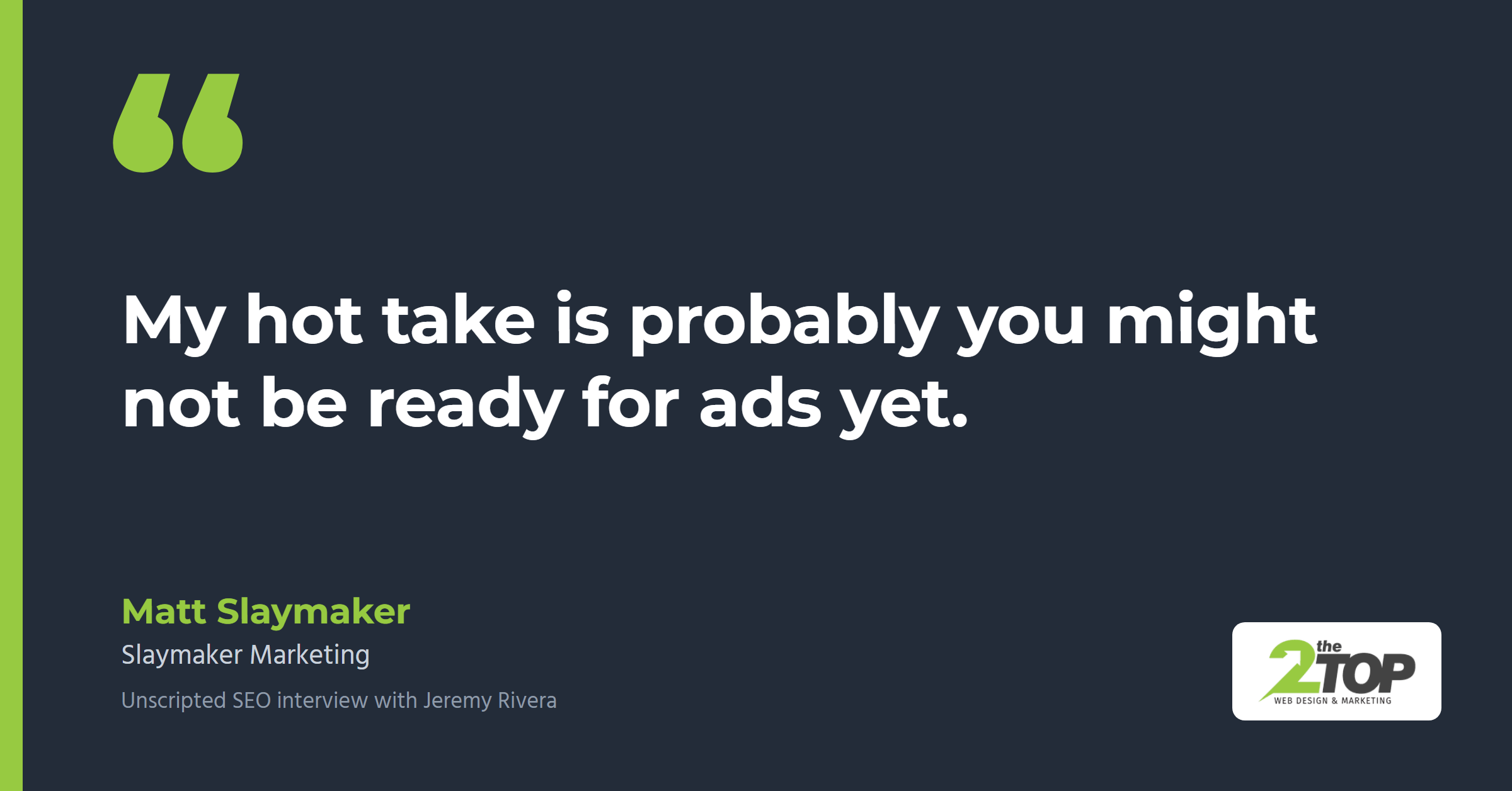
His test is your organic conversion rate. “If you’re not getting an organic conversion rate of two to three percent already, and it’s more like 0.5%, 0.4%, then your ads probably are never gonna work.” The reason is simple math.
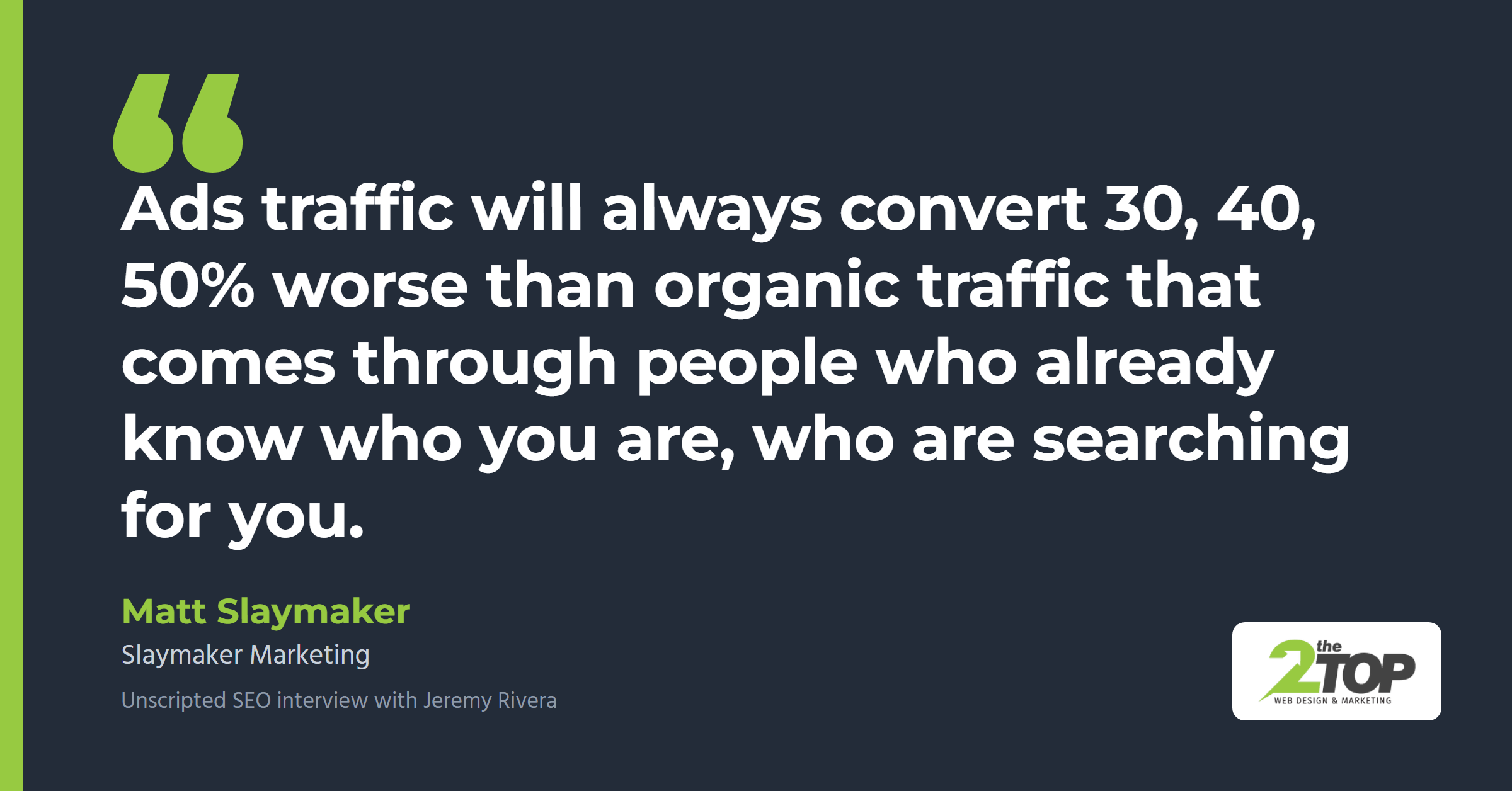
He also asks brands what their unique selling proposition is, and a lot of them can’t say. “If you can’t answer that question,” customers can’t tell you apart either, and you’re paying for clicks that land on a page that doesn’t explain why you. For a boring product that page is doing all the selling. Fix that first: a site redesign aimed at conversions is cheaper than a month of clicks it would have wasted.
Your storefront is moving off your website
The page still matters, but it isn’t the only place you get to make your case anymore. Matt pointed to Google letting shoppers check out right inside an ad, YouTube included, and to ChatGPT’s ad beta, which, when we recorded in July 2026, had started out charging advertisers around a $60 CPM. My friend Matt Brooks of SEOteric calls ChatGPT the most popular and least trained customer support rep your business has. It answers questions about you whether or not you’ve given it anything good to say.
So the pain-point work can’t live on one page. It has to show up in the ad, the shopping listing, the YouTube description and the answers AI tools give, because, as Slaymaker put it, “that might be the only chance that you get to actually explain yourself and present yourself to a user.”
If your ads are running and you can’t say what they’re doing, take Matt’s advice: “turn your ads off and evaluate is this actually doing anything for you?” Then find the pain point, fix the page, and turn them back on.
Hear the whole conversation on the Matt Slaymaker episode of The Unscripted SEO Interview Podcast. If you’d like a second set of eyes on your ads or your site, get in touch with us.
 About